Table of Contents
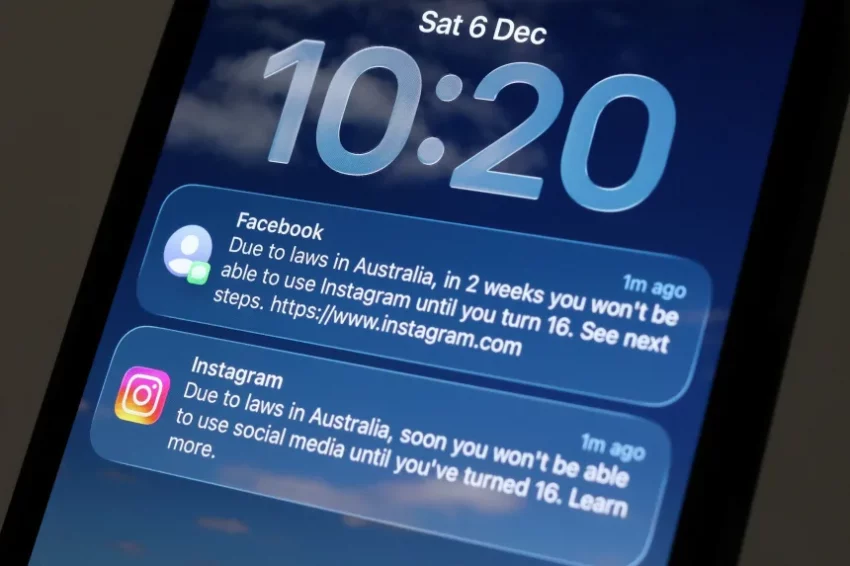
Australia has made history. As of December 9, 2025, the country officially became the first nation to enact a nationwide ban on social-media use for children under the age of 16.
Major platforms — including TikTok, Instagram, YouTube, Facebook, Snapchat, X (Twitter), Reddit, Twitch and others have been ordered to block users under 16 or face fines up to AUD 49.5 million (about USD 33 million).
For parents, educators, and anyone worried about youth exposure to social-media harms, this isn’t just a big headline — it’s a powerful case study in what’s possible when a society decides to draw a firm line. Australia’s social media ban is setting a new precedent. But as with all big ideas, the reality will be messy.
🚨 What’s Changing — And Who It Hits
🔒 What This Australia Ban Does
- As of the deadline, children under 16 must be blocked from creating or maintaining accounts on listed apps. Platforms must verify age or remove under-age accounts.
- For existing under-16 accounts, platforms must shut them down or temporarily block access.
- Platforms that fail to comply risk massive fines — up to AUD 49.5 million.
- Australia’s social media ban applies broadly: social-media, posting, sharing, chatting. (Some exceptions: youth mental-health tools, educational-only services, and “safe spaces” apps may be exempt.)
- This applies to all major platforms: TikTok, Instagram, YouTube, Facebook, Snapchat, X (Twitter), Reddit, Twitch, Threads, and Kick.
📊 The Stakes: Who It Affects
- According to official data ahead of the ban, 86% of Australians aged 8–15 used at least one of these social-media platforms.
- Millions of accounts owned by children and teens were expected to be deactivated or blocked within days.
- The rollout covers “the big 10” platforms first — but regulators say other emerging apps may be added later to close loopholes.
Why the Australia’s Government Did It — And Who’s Supporting It
✅ The Rationale: Mental Health, Addiction, and Safety
Policymakers in Australia have cited mounting evidence of social-media’s negative effects on children’s mental health, self-image, addiction, and exposure to harmful content. This new law follows years of calls from parents, child-welfare organizations, and some mental-health professionals demanding stricter national protections.
Supporters believe the ban will give kids the chance to rediscover offline life: reading, sports, hobbies, face-to-face friends — without the pressure of online feeds, likes, and algorithms.
👍 Parent & Advocate Reaction
Many parents welcomed the change. Some described their child’s use of social media as “addictive” — likening it to a harmful drug. For them, the law offers a “support framework” they simply did not have.
Child-safety advocates and family-focused organizations echoed this, calling the law a long-overdue recognition that children need real boundaries in a digital world.
The Pushback — And the Problems
Despite the applause from many parents, Australia’s ban on social media has also sparked strong criticism — from tech companies (that’s a surprise… 🙄), free-speech advocates, and even groups concerned about isolation for vulnerable youth.
📉 Corporate Pushback
- Major platforms and industry groups argue that this law undermines free expression, user privacy, and the nature of open internet communities.
- Some like X (formerly Twitter) have resisted compliance, calling the regulation a form of internet control.
⚠️ Concerns About Effectiveness and Unintended Consequences
- Critics warn this could become a “whack-a-mole” scenario: kids bypass the ban via VPNs, fake accounts, or shift to lesser-known platforms not yet regulated. Indeed, some Australian teens reportedly already discussed methods to circumvent the age checks.
- For teenagers in rural or remote communities, the ban risks cutting off vital social and creative connections — especially for those who rely on online communities for support, identity, or belonging.
- Some researchers caution that age-verification methods (selfies, ID uploads, AI-prediction) are imperfect, and could lead to overblocking or discrimination — or hide privacy issues.
🟢️ Clean Cut Media Take on the Australia Ban
- Yes, there are concerns about how this law will work — loopholes, imperfect age verification, and questions about enforcement. But we have to ask ourselves: are those challenges really more important than the mountain of evidence showing how deeply social media is harming our children?
- Is access to so-called “creative communities” or online social spaces worth the cost of rising addictions, stunted social growth, attention & mood disorders, depression, attacks on self-image, and relentless cyberbullying?
- Example: A recent CDC study (2023) reported 60% increase in feelings of persistent sadness or hopelessness among teenage girls in the past decade. Instagram’s own internal research that was leaked acknowedged the platform “makes body image issue worse for 1 in 3 teen girls”
- So what if age-verification methods are imperfect? A little inconvenience seems like a small price to pay if it helps protect an entire generation from mental and emotional harm.
- And yes, some kids will find workarounds — fake accounts, VPNs, borrowed phones. But that doesn’t mean we shouldn’t act. We can’t eliminate every danger in society — not crime, not drugs, not smoking, not drunk driving — yet we still take serious, aggressive steps to reduce their impact because they cause real harm.
- And the major platforms & industry groups? I think they mean it undermines their profits.
The truth is, our culture has drifted so far into entitlement and the worship of “individual rights” that we often forget our collective responsibility to protect what’s good, pure, and healthy — especially for our kids. Sometimes real freedom means setting boundaries. Sometimes love looks like limits.
If protecting children means inconveniencing adults or tech companies, so be it.
What It Means for Parents — In Australia and Beyond
Australia’s ban move matters beyond its borders. It’s the first real test of what happens when social media for kids is treated like alcohol or cigarettes — with age limits, enforcement, and heavy fines.
🌐 For Parents Worldwide: A Real-Life Example
- If Australia’s ban stays in place and shows positive mental-health or social-behavior outcomes, other countries may follow suit. We may soon see similar laws elsewhere.
- On the flip side: if evasion becomes widespread — or if harmful underground platforms take over — it’s also a cautionary tale about the limits of government regulation in the digital age.
🛡️ What Parents Can Do — Regardless of a Ban
Whether or not your country ever bans social media for minors, families can still take action:
- Treat social-media access like any other privilege — set clear age and time boundaries.
- Combine filters and accountability tools (e.g. parental control apps or monitoring software) to protect younger children.
- Encourage kids to develop offline skills: reading, hobbies, sports, real relationships.
- Be involved. Ask: What are you watching? Talking about? Uploading? Maintain open communication, not suppression.
- Focus on values, not just rules: teach healthy self-image, critical media thinking, empathy, and boundaries.
- Get informed and find out what has worked for others by reading resources like The Tech Exit: A Practical Guide to Freeing Kids and Teens from Smartphones (Clean Cut Review here)
The Broader Question: Is This Enough — Or Just a Band-Aid?
Australia’s social media ban is a bold, structural step — but it’s not a magic fix. It may stop casual under-16 use. But it won’t change underlying issues: peer pressure, mental health struggles, loneliness, or the addictive design of many platforms.
Ultimately, real protection begins at home — with parents, caregivers, educators, and communities teaching kids how to navigate media thoughtfully. Laws can help, but they can’t replace values, conversation, and guidance.
That’s why efforts like our own — promoting “clean cut” awareness, responsible viewing, balanced screen habits, and proactive choices — remain more important than ever.
If other parents or readers want to weigh in, share experiences, or question how to approach social media with kids, drop a comment below. This is a conversation worth having — worldwide.