Table of Contents
There’s a reason Toy Story has stayed in the hearts of audiences for over three decades. It’s more than a kids’ movie — it’s a reflection of how we grow up, what we lose, and what we cling to. And now, with Toy Story 5, Pixar is poised to tap into one of the most relevant tensions of this generation: the battle between imagination and screens.
Unlike earlier sequels that focused on growing up, losing friends, or finding purpose, Toy Story 5 takes on something new and uncomfortable: what happens when screens themselves become the toys of choice. Instead of Woody and Buzz battling other toys, they’re up against something far more pervasive — technology.
But Toy Story 5 is not just about entertainment. It’s a timely cultural moment that aligns with growing concern — from parents, researchers, doctors, and educators — about how screen time is reshaping childhood.
What We Know About Toy Story 5 So Far
🎬 The Premise of Toy Story 5
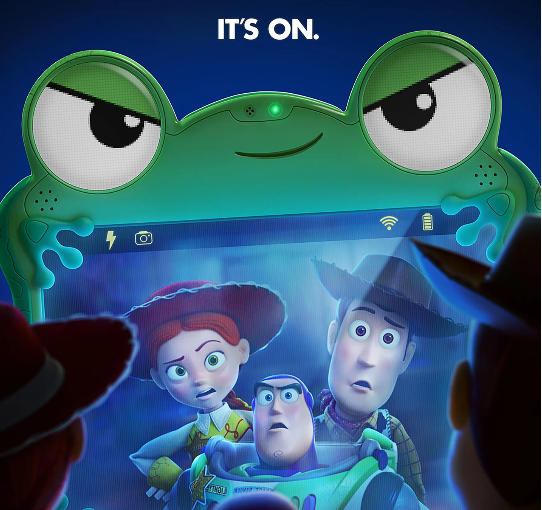
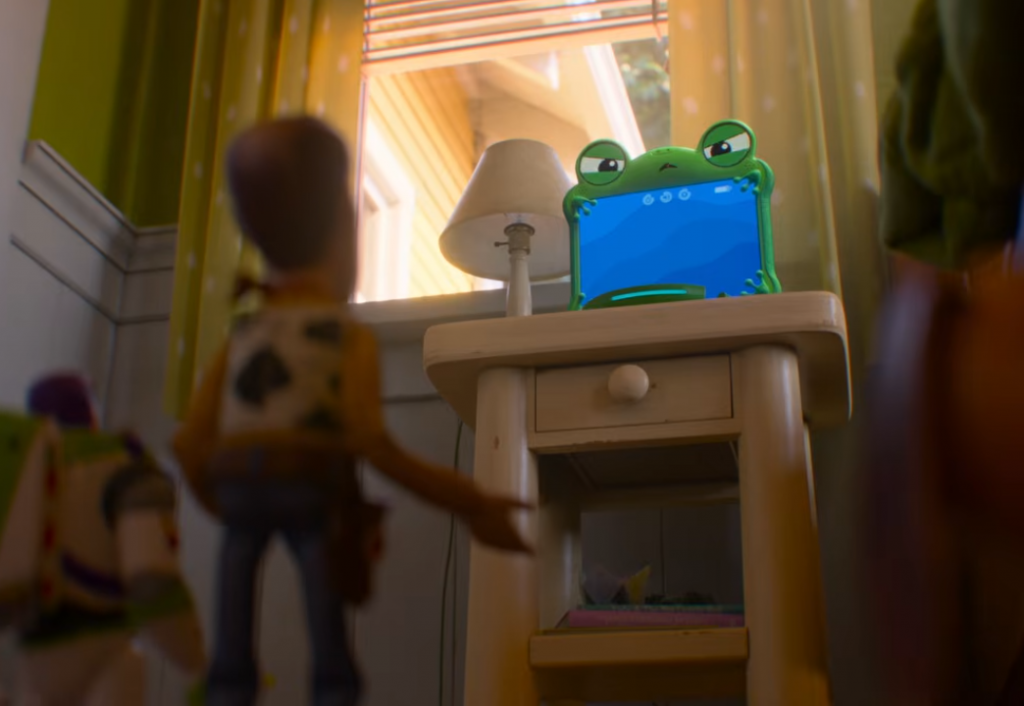
Toy Story 5 follows Woody, Buzz Lightyear, Jessie, and the rest of the beloved toy gang as they confront the biggest challenge of their careers: screens replacing play. Bonnie, now about eight years old, has become enthralled not by traditional toys but by a high-tech device called Lilypad — a frog-shaped smart tablet voiced by actress Greta Lee.
Lilypad isn’t just a gadget — she has personality, intelligence, and a magnetic pull that threatens the place that classic toys once held in Bonnie’s heart. Together, Woody, Buzz, Jessie, Forky, Hamm, Rex, Slinky, Mr. and Mrs. Potato Head, and others must figure out how to stay relevant in a world where screens dominate.
🎭 The Cast & Creators of Toy Story 5
- Tom Hanks returns as Woody.
- Tim Allen returns as Buzz Lightyear.
- Joan Cusack reprises Jessie.
- Greta Lee voices Lilypad.
- New characters include a tech-themed toy named Smarty Pants (voiced by Conan O’Brien) and others that embody modern gadgetry.
The film is directed and co-written by Andrew Stanton, known for Finding Nemo, WALL-E, and Finding Dory, and co-directed by Kenna Harris. Stanton and Harris have described this entry not as a simple “good vs. evil” tale but as a reflection on change, relevance, and purpose in an age where digital devices are often a child’s first love.
📅 Release Details
Toy Story 5 hits theaters on June 19, 2026.
Why Screens Are the Real Villains (and What That Says About Childhood)
At first glance, Toy Story 5 might seem like another fun Pixar adventure. But the choice of technology as the antagonist is symbolic — and deeply intentional given where childhood sits today.
Instead of having toys fight monsters, villains, or even other toys like in previous entries, Toy Story 5 positions screens — and the shift in children’s attention they represent — as the thing that threatens play itself.
This isn’t just storytelling flair. It mirrors real-world concern about how digital devices have reshaped play, focus, creativity, and social interaction in ways previous generations never experienced. This rewiring was further discussed in “How TikTok and Instagram are changing Kid’s Brains“
Screens vs. Imagination: What Research Tells Us
Over the past decade, hundreds of studies have explored the effects of screen time on children, teens, and young adults. The results paint a complicated, concerning picture — one that aligns with Toy Story 5’s themes.
Here’s what research has found from 2020–2025:
📊 1. Screen Time & Emotional Development
A Danish randomized trial found that reducing leisure screen media use for just two weeks improved emotional and social behaviors in children, including reduced internalizing symptoms (like anxiety or depression) and better prosocial behaviors. Experimental evidence like this — rare in screen research — shows that cutting back screens can have measurable positive effects.
📈 2. Addictive Screen Use & Mental Health
Large-scale data from the Adolescent Brain Cognitive Development (ABCD) Study showed that addictive patterns of screen use — not just total hours — were linked to significantly higher risk of suicidal thoughts and behaviors in adolescents. In other words, it’s not just how long kids are on screens, but why and how they’re using them.
This aligns with how Toy Story 5 frames screens as a compelling force that can crowd out imagination, relationships, and play.
🧠 3. Early Tablet Use & Emotional Regulation
Young children who engage with tablets and screens at early ages show poorer emotional regulation and increased tantrums over time. One hypothesis researchers suggest: screens are used as a soothing tool rather than a developmental tool — and that bootstraps a cycle of dependency.
This echoes how Lilypad in Toy Story 5 doesn’t simply replace toys — she dominates a child’s focus.
📉 4. Screen Time Predicts Later Mental Health Symptoms
Further ABCD research found higher baseline screen time associated with later depressive symptoms, drawing attention to how certain types of screen activities (videos, social networking) can negatively impact emotional well-being.
🗣 5. Teen Perceptions Shift
Pew Research surveys show that teens themselves increasingly report that social media has a mostly negative effect on their age group. Nearly half of teens now see the impact as negative — up sharply from earlier in the decade — signaling a cultural shift in how youth view screens.
The Real-World Backdrop: Screens in Everyday Life
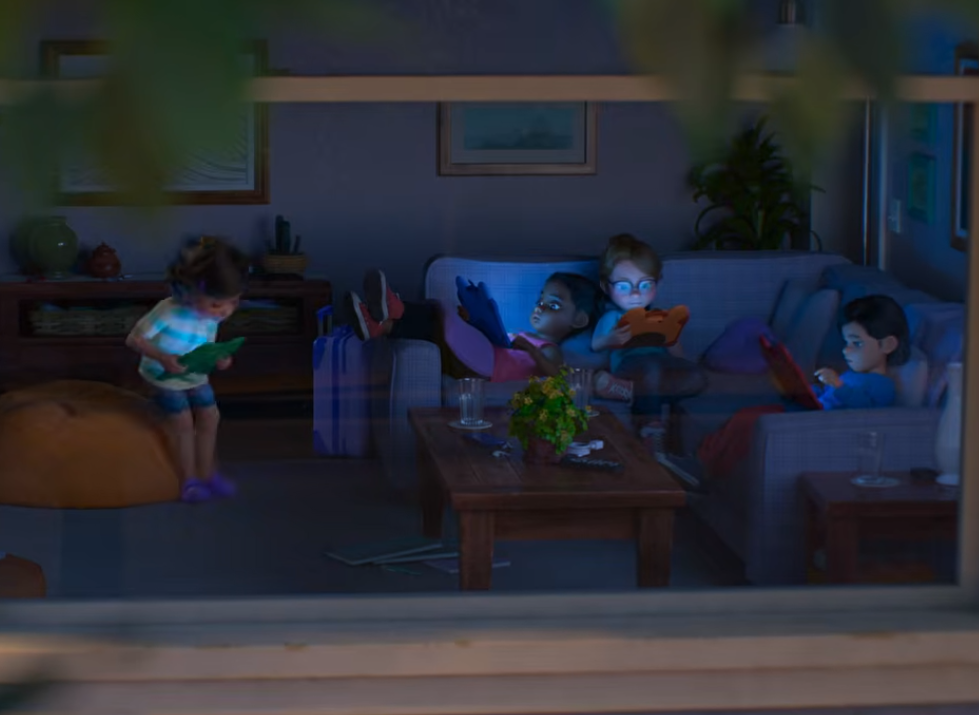
When we talk about Toy Story 5’s theme — screens encroaching on play — we’re not talking about a cartoon exaggeration. This is the reality many families grapple with every day.
🎯 Screens as a Parental Convenience
How many times have parents handed an iPad to a toddler at a restaurant, a phone to a child while grocery shopping, or a tablet during a long car trip? It’s practically second nature in many households — and not always for bad reasons. Screens do give parents a few moments of peace. They can help with learning apps, educational videos, and interactive tools. As we noted in our review of The Tech Exit, even well-intentioned screen use can become a substitute for connection rather than a bridge to it.
But what happens when convenience becomes the default?
Research suggests:
- Screens can displace meaningful play, creativity, and social interaction.
- Over-reliance can contribute to shorter attention spans.
- Children may learn to self-soothe with screens instead of developing emotional regulation.
So Toy Story 5’s conflict — toys vs. screens — isn’t just whimsical. It’s a metaphor for the real trade-offs many parents feel when balancing convenience with mindful parenting.
What Pixar Might Be Communicating Through Story
Pixar’s films have always been more than “just kids’ movies.” From Inside Out’s exploration of emotions to Finding Nemo’s themes of faith, fear, independence, and connection, the studio excels at layering meaning beneath the surface.
With Toy Story 5, the metaphor is powerful:
- Screens vs. Play: Toys symbolizing imagination, creativity, and tangible connection are threatened by a device that can simulate nearly any experience. Woody says a powerful line “Toys are for play, tech… is for everything.”
- Attention Economy: Children’s attention — a battleground in real life — becomes literal in the story’s world.
- Obsolescence: The toys’ existential question — “Are we obsolete?” — mirrors what many parents fear about traditional childhood in a digital world.
This theme extends beyond a simple good-vs-evil story. It’s about what childhood means when attention is monetized, algorithms optimize engagement, and screens simulate experiences that used to come from hands-on play.
Parental Lessons from Toy Story — Beyond the Movie
So what does Toy Story 5 mean for parents reading Clean Cut Media?
🧠 Listen to the Message
Pixar isn’t condemning technology outright — after all, life in 2026 is digital. (The movie itself is on screens!) But the story encourages viewers to ask:
- Are screens serving our children — or controlling their attention?
- Are we choosing technology for convenience — at the cost of imagination and other long-term mental and behavioral costs?
- How do we balance learning tools with play and real-world interaction?
These questions are not abstract. They’re supported by research showing that mindful boundaries around screen use can support emotional health, social skills, and overall well-being.
📆 Try Intentional Play Over Passive Digital Time
Experts recommend:
- Encouraging hands-on play daily.
- Limiting passive screen use (videos, social platforms) while prioritizing creative, educational interaction.
- Co-viewing or co-playing when screens are used to ensure context and connection.
- Utilizing filters and accountability tools to protect your family and yourself.
This isn’t about banning screens entirely. It’s about intentional use — using screens with purpose, not as a default babysitter.
A Bigger Cultural Conversation
Toy Story 5 arrives at a moment when society is reevaluating childhood in a digital age:
- Governments are proposing age restrictions and strict verification for social media.
- Pediatricians warn about mental health risks tied to excessive use.
- Parents are questioning whether screen-first childhoods are sustainable.
The film’s release amplifies this conversation in a way that’s accessible to families everywhere. It invites adults and children alike to think: What does play mean? What does attention mean? What does connection mean?
Conclusion: Screen vs. Play Isn’t Just a Movie Plot — It’s a Cultural Moment
Toy Story 5 is more than a nostalgic reunion with Woody and Buzz. It’s a story about adaptation, relevance, and the meaning of childhood in a world dominated by screens. Pixar is tapping into something deeply human: the tension between the old-fashioned joy of play and the relentless pull of digital devices.
And as research continues to show, that tension isn’t just a story element — it’s a real challenge families face every day. By aligning imagination, connection, and mindful technology use, Toy Story 5 may not just entertain — it may spark reflection in millions of households about how screens fit into childhood, parenting, and life itself.