Table of Contents
Intro — The Hidden Epidemic of Screen Time
In this article, we’ll break down the most shocking Youtube statistics that reveal how screens are rewriting our attention, our kids’ behavior, and every day life.
Every day, billions of people around the world open YouTube — not just for entertainment or education, but as a default habit. In 2025, the most staggering global Youtube statistic is that more than 1 billion hours of content is consumed every day, a figure that dwarfs almost every other digital activity and continues to grow every year.
And it’s not just passive viewing. What used to be a platform for sharing creative videos has become a meticulously engineered attention machine — one designed to keep you watching longer than you planned.
But few of us stop to ask the uncomfortable questions:
- How much of our day (or our children’s days) disappears on YouTube?
- What is the real impact on attention, learning, and emotional well-being?
- Why have we normalized this massive screen exposure, even as we once banned kids from smoking or drinking?
This article breaks down the latest YouTube statistics, screen time patterns, design mechanisms that fuel addiction, health and cognitive effects, and what parents can actually do to protect their families.
1. Youtube Statistics: Daily Use and Screen Time Trends
YouTube isn’t just popular — it dominates screen time in ways few other platforms ever have. In the United States alone:
- YouTube statistics show that it accounts for nearly 10% of all television viewership, exceeding Netflix’s share — and this includes daytime + living room TV usage, not just mobile viewing.
- Globally, users watch over 1 billion hours of YouTube content daily.
- Among younger users (UK & U.S. data), children spend an average of ~77 minutes per day on YouTube mobile.
From toddlers to teens to adults, YouTube has become woven into the fabric of daily life. But these numbers don’t just represent entertainment — they represent hours of attention lost to screens that could otherwise go to play, conversation, homework, creative pursuits, or sleep.

2. A Look at Overall Online Video & Screen Time Trends
YouTube is only part of the broader landscape. Across screen-based activities, time spent watching digital content has soared.
According to national surveys:
- Teens average ~7 hours 22 minutes per day on screens, with ~4.8 hours per day on social media and video platforms.
- Children aged 8–18 spend about 7.5 hours daily using screens on average — and that’s before school work or homework is counted.
This trend isn’t new — it’s an acceleration of a long-term shift. A decade ago, screens were mainly TVs and desktop computers. Today, they are mobile, social, and video-first devices in pockets, hands, and living rooms.
And while platforms differ in how they engage users — TikTok users may scroll ~1.5 hours/day and Netflix viewers may binge episodic series — YouTube’s unique structure invites habits that are as easy to slip into as they are hard to exit.
3. YouTube vs. TikTok, Netflix & Other Screen Activities
When looking at broader screen time trends beyond Youtube statistics, we also see similar high usage on platforms like TikTok and Netflix:
| Platform | Average Daily Use | Notes |
|---|---|---|
| YouTube Statistics | ~1 hour+ (children) + billions of total hours | Pushes a continuous mix of short + long videos. |
| TikTok Statistics | ~1 hr 37 min per day | Today’s fastest-growing short-video consumption. |
| Netflix Statistics | ~52 min per day (mobile) | Fewer habitual background views. |
| Social Media (aggregate) | ~2 hr 21 min daily | Includes videos + messaging + browsing. |
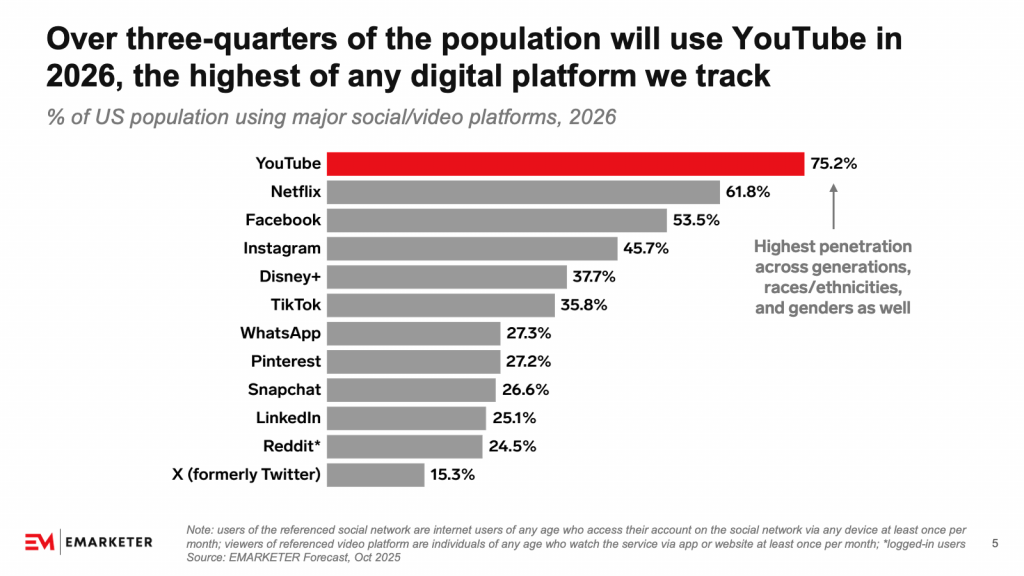
As seen in the chart above, Youtube Statistics far surpasses any other social media mediums with the highest penetration across generations, races / ethnicities, and genders.
Even when compared with addictive social apps like TikTok, YouTube holds its own — and in many cases absorbs attention that other platforms don’t. Its breadth of content — from music videos to tutorials to livestreams — means it’s always relevant, regardless of age or interest.\
4. Why YouTube’s Design Keeps You Watching
YouTube isn’t passively filling time — it’s engineered to capture attention and be addictive:
🔁 Autoplay & Infinite Recommendations
Once a video ends, the next one starts automatically. There’s no obvious stopping point — no “episode over” message. This can keep users scrolling or watching for double the time they intended.
🧠 Attention Optimization
Recommendation systems (algorithms) use machine learning to suggest videos tailored to you, creating a feedback loop where the platform continually serves you content that keeps your eyes on the screen longer.
📺 Cross-Device Expansion
YouTube has expanded beyond mobile: more users now watch it on TVs than phones, meaning it no longer competes only with apps — it competes with traditional television.
📊 Binge-Friendly Format
Unlike scheduled TV or even narrative streaming series, YouTube offers an endless variety of content that never forces a break — and encourages habitual consumption.
This design resembles other behavioral reinforcers — similar to how social media feeds keep scrolling or how slot machines keep flashing results — reinforcing repeated engagement even when users didn’t plan extended use.
5. What Research Says About Excessive Screen Time
Emerging Youtube statistics from cultural trends show correlations between high video consumption and attention challenges – but the explosion of screen time has sparked a wave of scientific studies exploring why this matters — especially for children and teens.
📌 Teen Mental Health and Social Media
A Pew Research Center survey in 2025 found that parents and teens increasingly view social media (including YouTube) as having a negative impact on youth mental health.
📌 Screen Time and Behavioral Risks
Research published in JAMA has shown that trajectories of addictive screen and social media use (not just total hours) are linked with higher risk of suicidal thoughts and emotional problems. These patterns point to compulsive use — a hallmark of addictive engagement rather than casual viewing.
📌 Teens and Social Media Use
Studies suggest that teens who spend more than three hours daily on social media have double the risk of experiencing symptoms of anxiety and depression compared with those with lighter use.
📌 Teens’ Overall Screen Exposure
CDC-linked research shows that teens with 4+ hours of daily screen time are more likely to experience poorer health outcomes — including mental health and sleep irregularities — compared with peers under that threshold.
📌 Developmental Context
Children under age 8 average around 2.5 hours per day of screen exposure — with Youtube video watching a leading contributor — despite stronger recommendations to limit screens in early childhood.
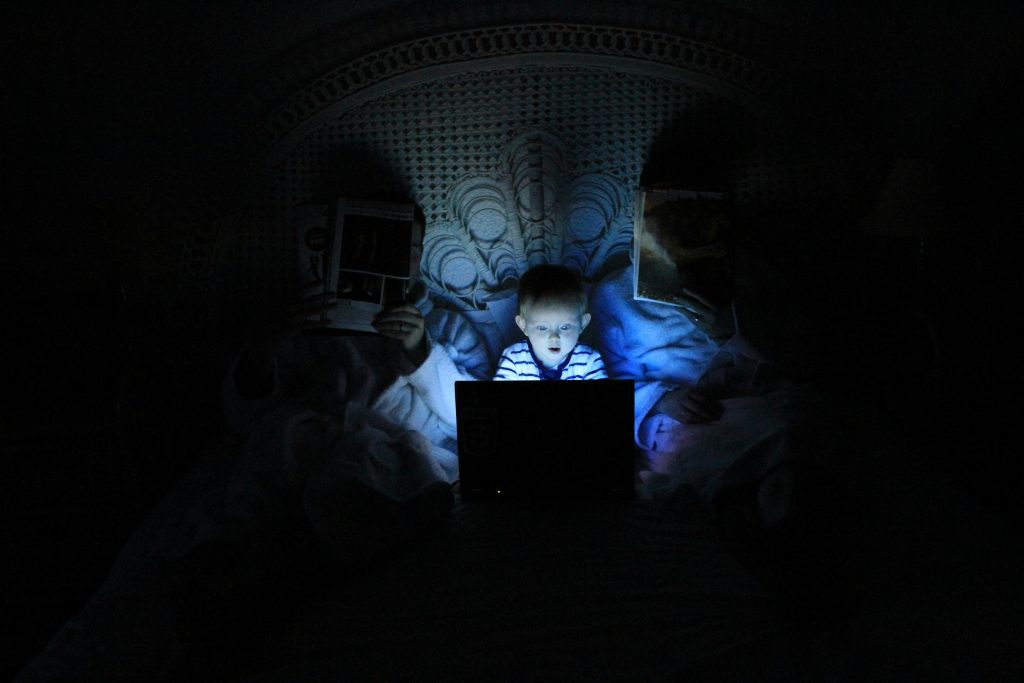
Collectively, these findings point to not just high usage but measurable correlations with emotional, behavioral, and cognitive outcomes — especially when usage is high, compulsive, or displaces other activities like play, sleep, or face-to-face interaction.
6. The Real Cost on Kids: Attention, Academics, & Mental Health
Too much screen time doesn’t just fill hours — it reshapes how children think, learn, and feel.
🔹 Attention & Focus
Long sessions on video platforms such as Youtube have been linked with reduced attention spans and difficulty sustaining concentration on non-digital tasks — a concern echoed in many pediatric studies.
🔹 Academic Performance
One of the most consistent findings in screen-time research is the negative correlation between excessive digital media use and academic outcomes — particularly when screens displace homework, reading, physical play, or sleep. A 2023 national survey conducted by the National Education Association (NEA) across 12,000 U.S. high school students found that students reporting more than 4 hours of daily screen time were twice as likely to earn lower grade point averages, even after controlling for socioeconomic status and prior academic performance.
Similarly, a 2022 study published in the Journal of Educational Psychology analyzed test scores from 8,500 middle and high school students in districts with 1:1 device programs (where every student was issued a tablet or laptop). Researchers found that the introduction of these devices was linked to a small but statistically significant decline in standardized reading and math scores within the first year of adoption, particularly in students who spent more than 3 hours daily on non-educational screen activities.
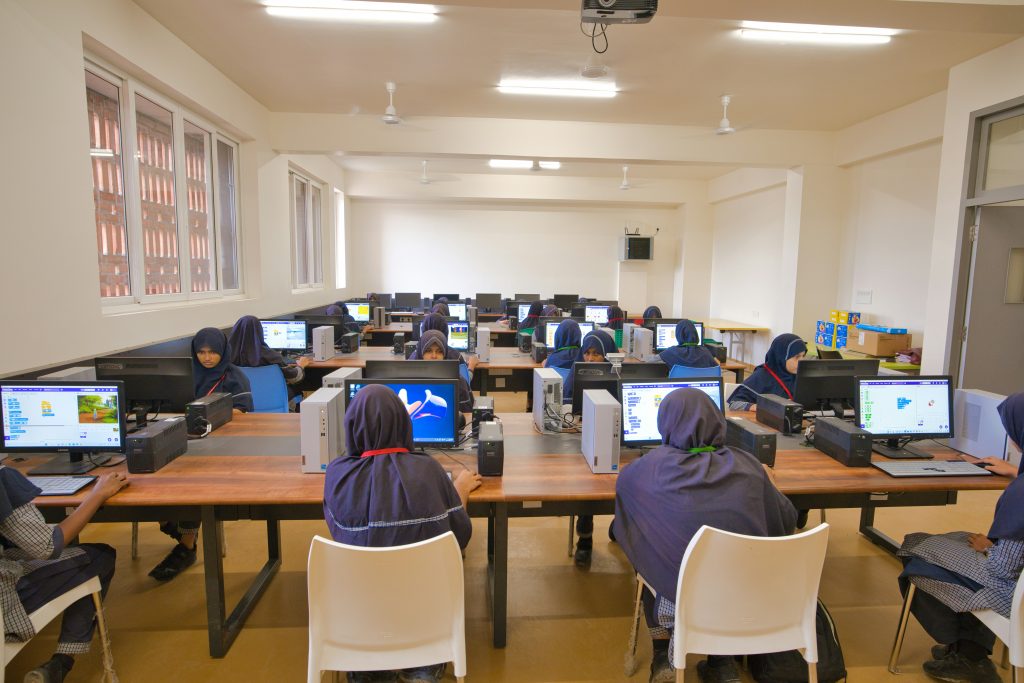
Perhaps most strikingly, two school districts in the U.S. that implemented phone-free policies during school hours — one in Minnesota and another in Pennsylvania — reported measurable academic improvements within a single semester. The Minnesota district saw a 7% rise in math and reading proficiency scores attributed to reduced in-class distractions, and the Pennsylvania district reported fewer disciplinary referrals and more consistent homework completion post-policy. Although not randomized controlled trials, these large-district data suggest reducing unnecessary screen exposures can yield immediate academic benefits, especially when devices are used mindfully, not as default learning tools.
🔹 Emotional Well-Being
High screen exposure is associated with elevated anxiety, depression, and emotional dysregulation in youth — especially when combined with irregular sleep and social comparison dynamics.
Researchers are still untangling cause and effect, but one large analysis involving 50,000 children found that more than 4 hours of daily screen time was linked with higher odds of anxiety, depression symptoms, behavior problems, and ADHD, with sleep and physical activity acting as mediators.
7. Why Society Lets It Slide
We wouldn’t let a child smoke, drink, or do drugs — behaviors we know carry serious health risks. Yet decade after decade, screen time has risen like clockwork — often unexamined and accepted as normal.
Take one recent parent survey:
- Nearly 49% of parents rely on screens daily to manage childcare duties and behavior.
- More than 54% of parents worry their child is addicted to screens, yet feel unsure how to act.
Why the disconnect? Several forces are at play:
- Convenience: Screens fill gaps in parenting moments — meals, errands, waiting rooms.
- Norms: Everyone else is doing it, so it must be okay.
- Guilt & Adults’ Habits: Many adults struggle with their own screen use — making it harder to enforce limits.
- Lack of Awareness: Not all parents know the latest research showing the real associations between screens and mental health.
This disconnect — between evidence and behavior — is precisely what allows YouTube and other platforms to expand their influence beneath the radar of daily life.
8. Practical Solutions for Families
Parents do have agency — actionable steps that can make a real difference. The key is intentional design of screen use, not just reactionary rules. To counteract the most alarming Youtube statistics about screen time and attention loss, here are some practical actions you can take:
🕐 Daily Habits & Limits (Practical)
- Define Daily Screen Time Boundaries
Set clear, consistent limits for video watching, including YouTube. Consider using built-in YouTube Kids timers, device usage dashboards, or scheduled downtime. - Earned Screen Time Philosophy
Rather than giving screen time as a default, let children earn it:
‣ 2 hours of outdoor play or reading = 30 minutes of favored screen time
‣ 1 hour of chores/physical activity = 20 minutes of video This frames screens as a reward, not a right. It also encourages balance. - Delay Smartphones Until High School
Consider waiting until at least 8th–9th grade to give your child a smartphone. Kids who don’t get phones early often develop stronger social skills, deeper focus, and more creativity — simply because they aren’t tethered to screens by default. Research supports this: a 2024 Pew Research Center supplement found that families who delayed phones until teens entered high school reported higher academic engagement and fewer behavioral concerns with social media. - Turn Off Autoplay and Push Notifications
Many YouTube engagement spikes you see are due to autoplay, autoplay “next” content suggestions, and incessant push notifications — all designed to keep attention on the platform. 📍 Action: Turn off autoplay settings and notifications on all devices at home.
📶 Environmental & Structural Changes
- Scheduled Wi-Fi/Device “Off Hours”
Establish home rules like:
🕙 Wi-Fi off / devices off from 10 p.m. – 8 a.m.
This ensures sleep isn’t disrupted by late-night scrolling and reinforces healthy rhythms. Many parents find that setting a communal tech cutoff time benefits everyone in the household — parents included. - Designated Screen-Free Zones
Make bedrooms, dinner tables, and family spaces screens-off areas. This protects focus and fosters intentional offline interactions.
🤝 Parental Tools & Monitoring
- Use Accountability & Filter Tools
Tools like Covenant Eyes can help track and limit screen use across devices — particularly for older teens and adults. Tracking increases awareness, which is often the first step toward change. 📍 Internal Link: See our full review of Covenant Eyes to learn how it can help families create accountability around screen habits. - Active Monitoring & Co-Viewing
Instead of “out of sight, out of mind,” co-view videos with your kids when possible. Talk about what they watch — what’s funny, what’s questionable, what feels true or false. This builds critical thinking around content.

👨👩👧 Family Culture Change
Educate Together
Explore research together (e.g., look at YouTube statistics like watch time charts side by side) and ask: “What do we think about this as a family?” Turning data into conversation builds awareness and empowerment.
Create a Family Media Plan
Draft a family media agreement that spells out when screens are used, limits, boundary expectations, and what happens when limits are reached. Involve kids in writing it — ownership increases compliance.
Embrace Non-Screen Rituals
Promote daily offline activities like reading before bed, board games on weekends, or family walks in nature. These replace screen dopamine loops with real human connection.
Conclusion — Reclaiming Attention in a Screen-Saturated World
The Youtube statistics explored in this article paint a clear picture: out screen habits are reshaping youth and adult attention alike. Youtube can be wonderful tools for learning, creativity, and connection, but without intentional boundaries, the data is clear: screens are capturing more time and attention than we realize — especially among children and teens.
And while convenience, social norms, and digital culture have lulled us into acceptance, the long-term developmental, mental health, and cognitive associations documented in research deserve thoughtful action.
This isn’t about fear or denial — it’s about awareness, boundaries, and purposefully choosing how technology fits into family life.
For more guidance on reducing reliance on screens and helping children cultivate healthier habits around technology, check out our article on The Tech Exit: A Practical Guide to Freeing Kids and Teens from Smartphones.
Together, families can move from being hooked by design to being in control by choice — protecting childhood, focus, and emotional well-being one intentional habit at a time.
Do you have any practical rules or actions you took to counter these alarming Youtube Statistics? What has worked and not worked? Please share!